




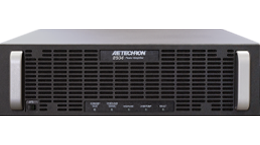
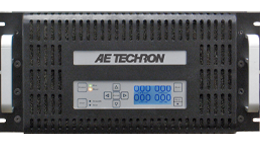
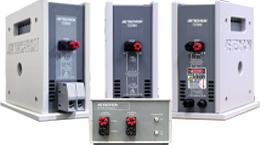

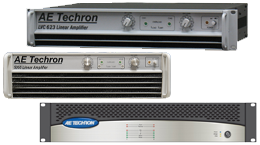














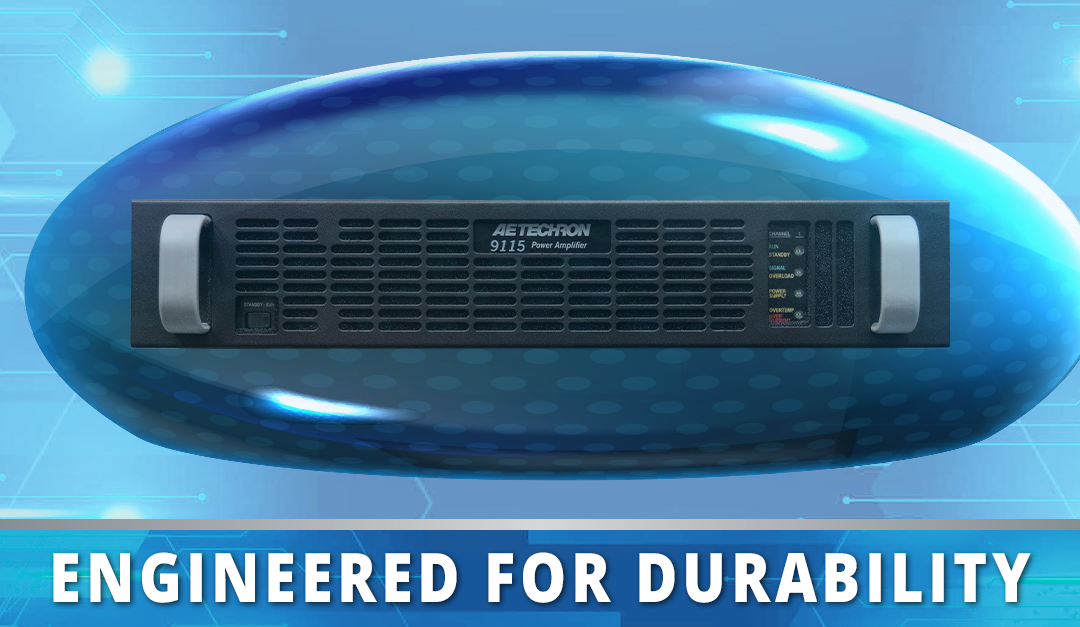
At AE Techron, durability isn’t an afterthought—it’s engineered into our products from the very beginning. Whether it’s a high-power amplifier or a complete EMC test system, every design decision is guided by a simple question:
How do we make this product reliable in the real world?
The answer lies in a disciplined engineering process that starts with extensive simulation, coupled with conservative design principles, followed by multiple prototypes, and rigorous validation testing.
Engineering Reliability Before Hardware Exists
Long before a physical prototype is built, our engineers use electronic simulation tools—often referred to as digital twins—to analyze how circuits behave under real-world conditions.
These simulations allow our engineers to explore extreme operating conditions and identify potential weaknesses before hardware exists.
Key elements of our simulation approach include:
- Running computer-automated simulations on each subsystem during development
- Modeling internal voltages and currents not visible at circuit terminals
- Stress-testing components beyond expected operating conditions
- Identifying design issues before physical hardware is built
This approach helps our engineers refine designs faster and avoid costly redesign cycles later in development.
Conservative Design for Long-Term Reliability
Simulation is only the first step. Our engineering philosophy also emphasizes conservative component design.
Components such as resistors, capacitors, inductors, and semiconductors are intentionally operated well within their rated capabilities. Depending on the component type, guard bands typically place normal operation at 50-80% of the part’s rating.
This provides a significant safety margin and protects against hidden stresses caused by parasitic inductance, voltage spikes, or abnormal operating conditions.
Operating components well below their limits increases lifespan and ensures the amplifier remains stable even under unexpected conditions.
Built-In Protection Systems
Durability also comes from multiple layers of protection built directly into the amplifier hardware.
Our systems continuously monitor operating conditions and intervene before damage occurs.
Typical protection features include:
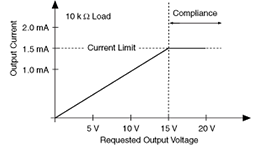
- Instantaneous current limiting
- Power rail over-voltage monitoring
- Temperature monitoring at 10-15 locations within the amplifier
- Intelligent variable-speed fan cooling
- Automatic standby or shutdown when abnormal conditions occur
Advanced models incorporate shoot-through detection, which can sense abnormal current flows in the output section of the amplifier. This protection has the ability to shut down amplifier operation so quickly that if any parts are damaged, it is limited to just a few replaceable parts.
Structured Prototyping Improves Product Reliability
Durable products require disciplined development. Our engineering team follows a structured phase-gate prototyping process:
- Proof-of-Concept (POC) – early feasibility validation
- Functional Prototype – working system testing
- Production-Intent Prototype – design refined for manufacturing
Each phase may involve multiple circuit board revisions (“board spins”), ensuring performance and reliability are validated before production begins.
The complete development cycle can take one to two years, ensuring the product is stable and ready for demanding real-world use.
Validation Testing at the Edge of Operation
Before entering production, every product undergoes extensive validation testing.
Design Verification Plans and Reports (DVP&R) typically include 20-30 test parameters, stress testing majors circuits
Testing pushes the system to the edges of its operating envelope, including:
- Resistive loads
- Capacitive loads
- Inductive loads
- Mixed load combinations
Rather than forcing destructive failure, these tests confirm that protection circuits activate properly and that performance remains consistent across multiple units.
Next in the Series
In Part 2 of this series, we’ll explore what happens after the design is complete. From production testing and burn-in processes to final inspection and quality checks, AE Techron ensures every unit shipped meets our extensive durability standards.